


MobileTrader
MobileTrader - ¡El comercio siempre al alcance de su mano!
¡Descárgalo y empieza ya!

 14.01.2026 05:14 PM
Under the pressure of geopolitical crises, changes in monetary policy and a deep transformation of technology supply chains, new investment paradigms are taking shape.
Silver surpassed $88 an ounce for the first time in history, marking an unprecedented surge of the white metal as both a safe?haven asset and an industrial resource. At the same time Bitcoin has broken a multiyear correlation with gold, hinting at the start of a powerful new rally, while altcoins are seeing a massive capital outflow — more than $40 billion has been withdrawn from speculative positions. Against this backdrop of market shocks, tech giants including Google are accelerating the relocation of flagship-device production from China to Vietnam, confirming the trend toward diversifying global supply chains.
In this article, we analyze four key events that are shaping the direction of the global economy, financial markets and technological sovereignty at the start of the new year.
Silver set a historic record, topping $88 an ounce
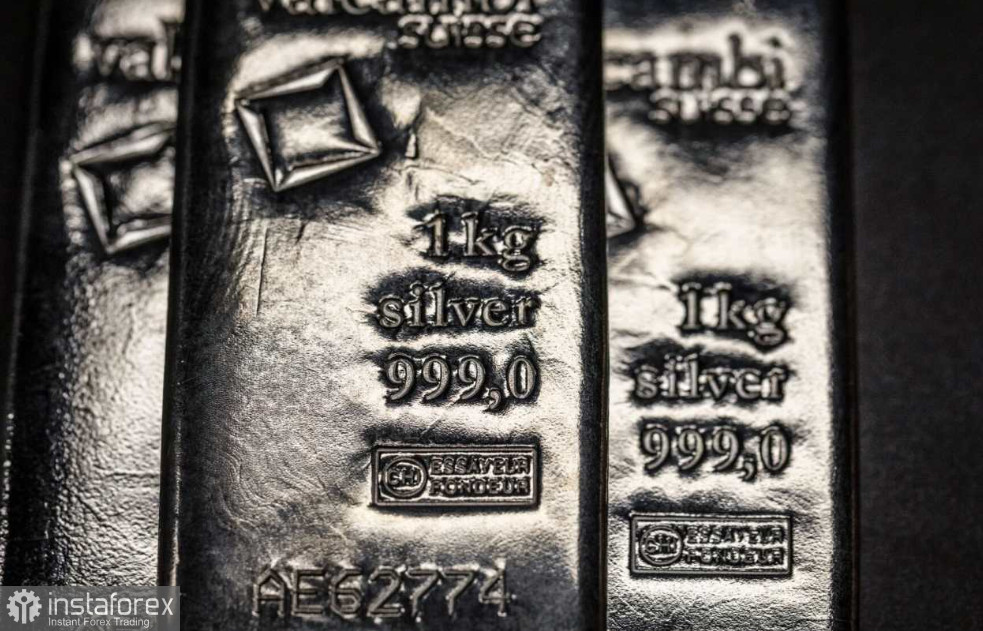
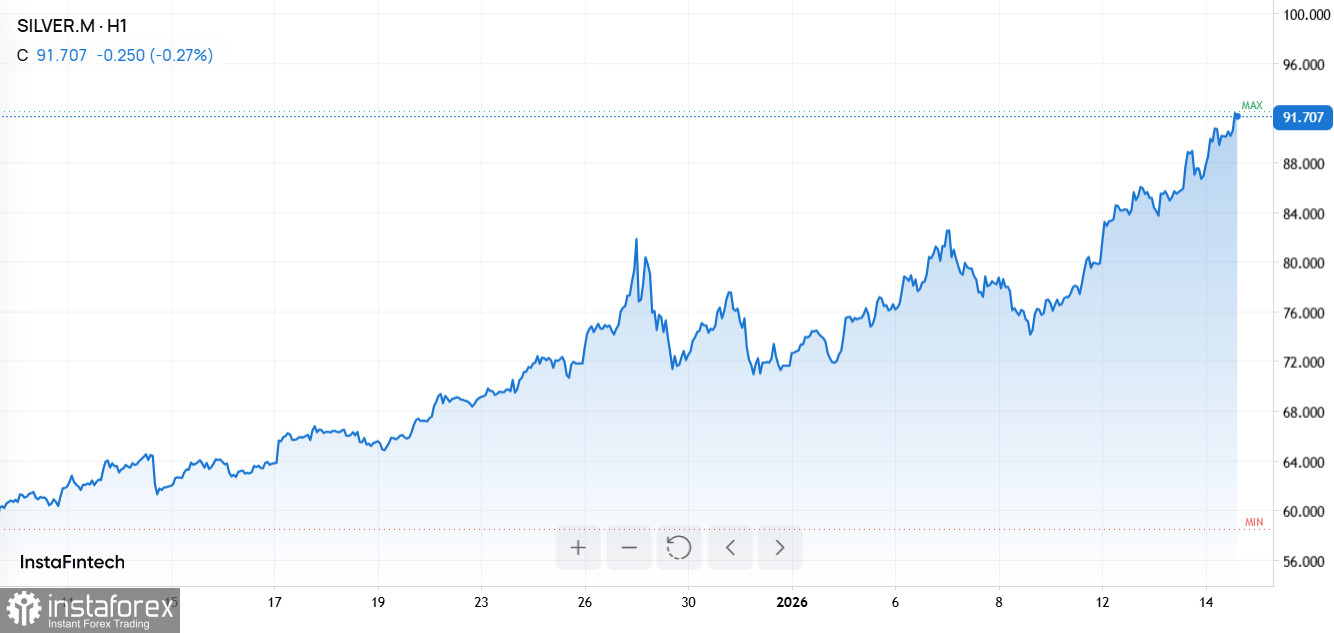
At the start of trading on Tuesday, January 14, 2026, silver jumped above $88 an ounce for the first time in history, continuing the powerful rally that began back in 2025. The rise of the white metal — fueled by geopolitical instability, growing industrial demand and expectations of rate cuts by the Federal Reserve — pushed its price up more than 20% in the first two weeks of 2026. Over the whole of 2025, silver rose by roughly 145%, transforming from a traditional safe-haven into one of the most dynamic instruments in the precious-metals market.
On January 12, silver reached its historic high — above $88 an ounce — the highest price on record. In the subsequent trading sessions, the metal traded in a narrow range of $85–88. At the same time, gold also showed solid gains, passing the $4,600 an ounce mark.
However, silver is displaying much higher volatility and faster growth. This caused the gold/silver price ratio to fall sharply from an extreme 100:1 at the start of 2025 to roughly 57:1 now, indicating increased appeal of silver not only as a haven but also as a strategic industrial resource.
The main drivers of the rise are global geopolitical shocks. A US military intervention in Venezuela and the capture of President Nicol?s Maduro at the end of 2025 triggered a new wave of uncertainty in world markets, pushing investors to reallocate capital toward real assets. Ongoing tensions around Iran and the protracted conflict in Eastern Europe are adding further pressure to markets.
Domestically, the situation is aggravated by a Justice Department investigation into the leadership of the Federal Reserve. Fed Chair Jerome Powell called the probe a "pretext" to pressure the central bank into forcing rate cuts. Such events undermine confidence in the dollar as a reserve currency and increase interest in alternative assets. Current market estimates expect the Fed to cut its key rate at least twice in 2026, which makes non?yielding assets — primarily silver and gold — especially attractive.
The record rise in silver is driven by a combination of factors — from global conflicts to domestic political struggles in the US. The drop in the gold/silver ratio to 57:1 points to the prospect of further acceleration in silver's rise, especially if industrial demand continues to grow amid the energy transition and the expansion of green technologies.
Traders tracking precious?metals dynamics can take advantage of the current volatility and sustained uptrend by taking direct positions in silver or using gold/silver spread strategies.
Given the current market environment, traders should consider opening long positions in silver or using pullbacks within the $85–88 range to enter longs, aiming for new record highs. Short-term trades on retracements may also be possible, especially in conditions of high volatility. It is also important to account for the correlation between gold and the US dollar when making trading decisions.
Silver and gold are available for trading on the InstaForex platform. Traders are advised to open a trading account with InstaForex for prompt access to these instruments. For maximum convenience and position control in a fast?moving market, we recommend downloading InstaForex's mobile app, which provides the full functionality of a trading terminal anytime, anywhere.
Bitcoin breaks free from gold's price orbit for the first time in almost four years

Analysts expect a powerful rally. Bitcoin has broken its correlation with gold for the first time since early 2022, a technical signal that has historically preceded significant upward moves for the cryptocurrency. This has sparked lively debate in the investment community: some analysts are confident the asset will soon test new record levels, while others argue the current situation differs from past cycles. Nevertheless, past statistics give reasons for optimism.
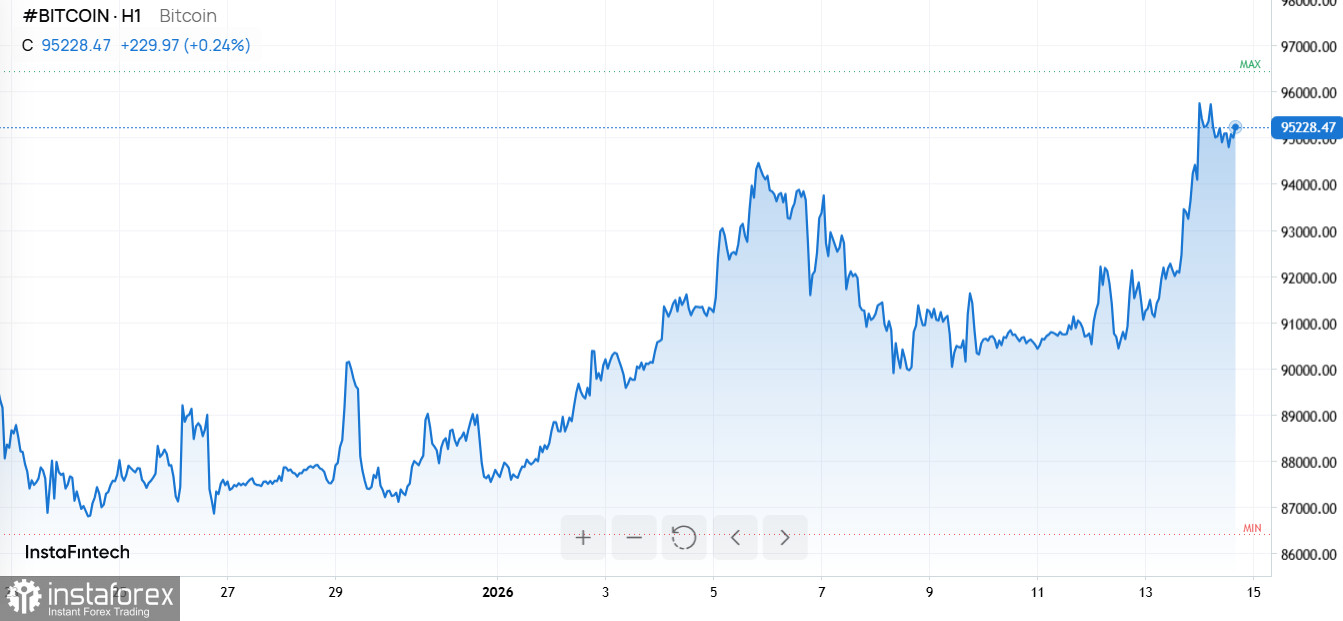
According to Cointelegraph analyst Yashu Gola, the 52?week correlation between Bitcoin and gold recently dropped to zero and is likely to turn negative by the end of January. In four comparable cases since 2017, after correlation turned negative, Bitcoin on average rose about 56% over roughly two months. At current prices (around $96,000), this could imply a target range of $144,000–$150,000.
The crypto's rise is occurring amid improving macroeconomic conditions. Inflation in the US has slowed, and progress is being made in Congress on crypto?related regulation. On January 13, Bitcoin hit a two?month high above $96,000, triggering liquidations of short positions totaling more than $500 million.
Matt Hougan, CIO of Bitwise, noted: "Bitcoin bull markets coincide with periods of rising global liquidity. The new cycle of policy easing will act as a price catalyst into 2026."
Indeed, the Federal Reserve in December 2025 ended quantitative tightening by stopping the monthly balance?sheet run?off that had been a structural headwind for risk assets. Moreover, the Fed cut interest rates three times in a row, bringing the target range to 3.5–3.75%.
Analyst Tor DeMeester observed on January 12 that "accelerated money issuance remains the main bullish factor for Bitcoin," citing expansion in global M2 money supply. However, some experts point out that Bitcoin has recently decoupled from the pace of growth in global liquidity, adding uncertainty.
Historically, a weakening correlation between Bitcoin and gold has preceded powerful rallies. Against a backdrop of slowing inflation, Fed easing and rising global liquidity, conditions are in place for continued crypto gains. Current fundamental and technical factors point to a potential rise to $144,000–$150,000 in the coming months.
Traders can capitalize on this by opening long positions in Bitcoin in anticipation of further gains. Strategies that combine technical signals (such as the correlation break) with macro data look especially promising. It's important to manage volatility with risk controls, including stop?losses and partial position exits as targets are reached.
Altcoins lose appeal: more than $40 billion exited speculative positions
The crypto market is undergoing a major reshuffle: speculative assets known as altcoins are rapidly losing appeal among investors. According to a new report by market maker Wintermute, more than $40 billion was withdrawn from altcoin positions during a large risk-reduction wave. This was one of the sharpest capital reallocations toward more reliable, liquid assets in crypto's history.
Wintermute's analysis of over?the?counter trading found that bull cycles for lower?cap cryptocurrencies now last an average of just 20 days — roughly half the 40–60 days typical of previous market cycles.
This compression suggests the era of the "altcoin casino," when risky assets could multiply in short order, is coming to an end. Retail investors are revising strategies and returning to fundamentally resilient assets.
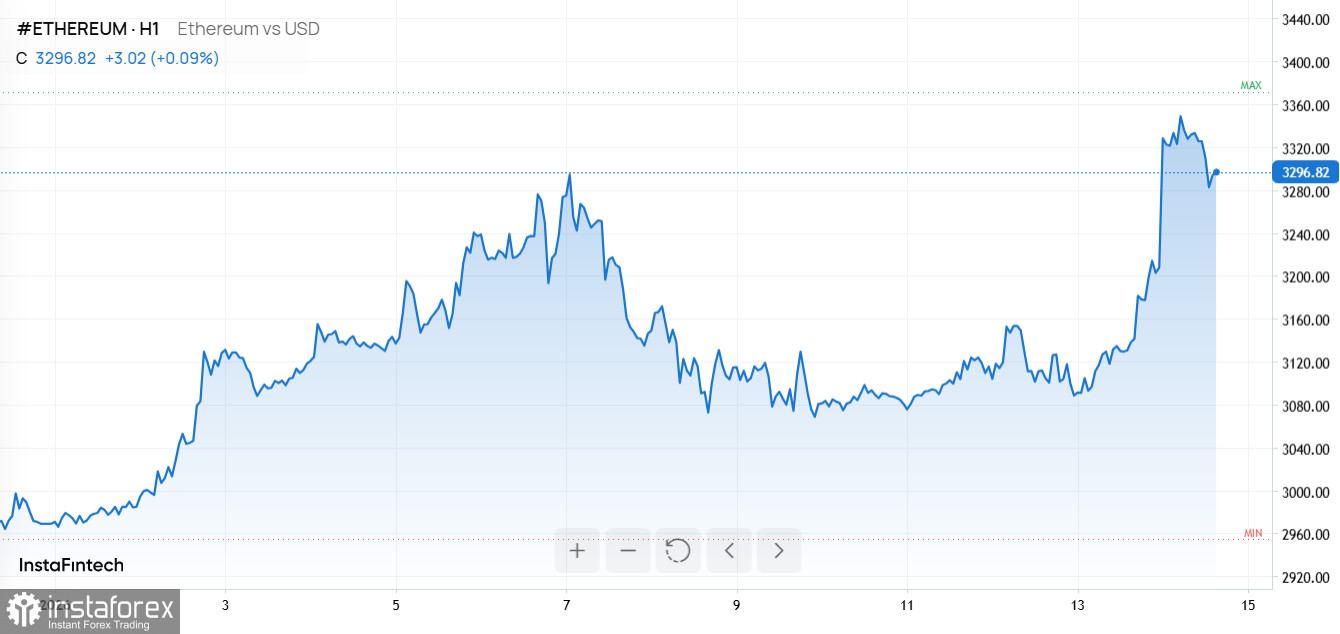
Particularly telling is Bitcoin's strengthening dominance, with its share of total crypto market capitalization rising to 60%. Wintermute's internal data also show retail traders actively reallocating capital from altcoins into Bitcoin, reflecting a growing consensus that large, liquid assets should lead before investors return to smaller, less liquid tokens.
In its December market review, Wintermute noted: "Altcoins continue to underperform, weighed down by heavy token supply and a crowded unlock schedule, which continues to pressure the long tail."
The 2025 OTC trading report also emphasizes that trading activity remained stubbornly focused on the two largest assets by market cap — Bitcoin and Ether — unlike previous cycles when institutional investors actively rotated into smaller tokens.
The altcoin market is experiencing a structural downturn driven by high supply, reduced risk appetite and capital migration toward Bitcoin. Bull cycles for altcoins have shortened, and their volatility no longer attracts the mass investor. In the current phase, Bitcoin shows more resilient dynamics, prompting traders to reassess strategies and focus on leading assets.
Given Bitcoin's rising dominance and capital outflows from altcoins, traders should consider opening long BTC positions and using altcoin corrections for short?term trades. It's also important to monitor volumes and liquidity to enter new growth phases in a timely manner.
Google speeds up transfer of flagship smartphone production to Vietnam

Alphabet, Google's parent company, will this year begin developing and producing its flagship smartphones in Vietnam, Nikkei Asia reported on Tuesday, emphasizing that the decision marks an important step in the US tech giant's strategy to reduce reliance on China. New production capacity will let Vietnam become not just an assembly site but a full development and manufacturing hub for premium Pixel devices, including Pixel, Pixel Pro and Pixel Fold models.
Sources cited by Nikkei Asia say the budget Pixel A series will remain manufactured in China, while the premium segment will be shifted to Vietnam. Reuters noted it could not independently confirm the report at the time of publication.
Still, Google already launched Pixel production in Vietnam in 2023 through contract manufacturers Foxconn and Compal. By the end of 2025, nearly half of all flagship Pixel models were produced there.
This move goes beyond a simple reassignment of assembly lines. Implementing New Product Introduction (NPI) processes in Vietnam indicates Google views the country as a strategic hub capable of supporting the full cycle of premium-device creation — from design to mass production.
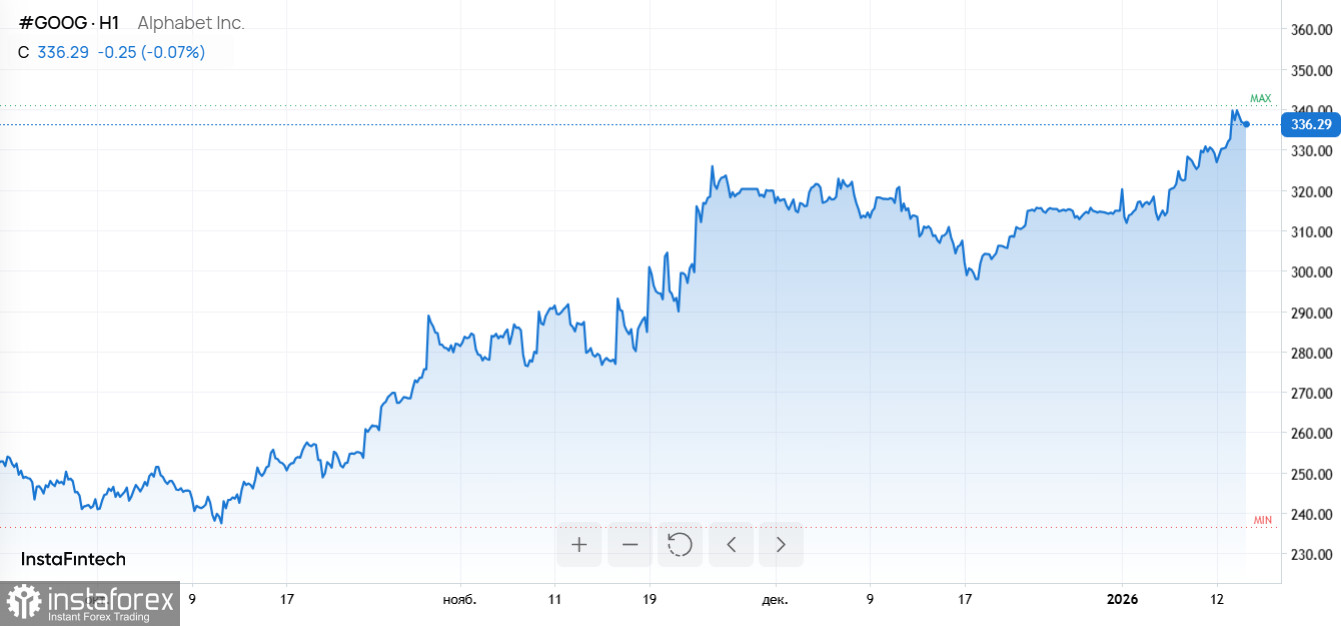
Google's approach parallels Apple's strategy of ramping up iPhone production in India. By the end of 2026, Apple plans to manufacture most iPhones destined for the US market in India. In the fiscal year ending March 2025, Indian factories assembled over 40 million iPhones, and volumes are set to nearly double in coming years.
The driving force behind these changes is growing concern among US tech companies about excessive dependence on China. Amid escalating trade frictions and the threat of new tariffs, companies are seeking alternatives in Southeast Asia.
Tariff differentials are particularly noteworthy: when imported into the US, goods from Vietnam may face duties up to 46%, while imports from China could face tariffs up to 145% under the tariff regime introduced during Donald Trump's presidency. That difference creates a strong incentive to relocate production.
Google's strategic move strengthens Vietnam's role in its global supply chain. This not only reduces risks related to geopolitical tensions and trade restrictions but also creates new technology manufacturing centers in Asia. For markets, this means greater volatility in electronics, logistics and supply sectors, and a reallocation of investment flows in the region.
Increased investment in production capacity in Vietnam and India could have a positive effect on shares of companies tied to logistics, semiconductors and contract manufacturing — such as Foxconn and Compal — and on the stock markets of those countries. A weakening of China's position in high?tech exports could affect currency pairs including USD/CNY and USD/VND, as well as the stock prices of Alphabet and Apple, particularly regarding changes in operating costs and supply chains.
To start profiting from current market conditions, it is recommended to open a trading account with InstaForex. For maximum convenience and rapid response to market moves, download the company's mobile app, which provides market access anytime, anywhere.
MobileTrader - ¡El comercio siempre al alcance de su mano!
¡Descárgalo y empieza ya!
You have already liked this post today
*El análisis de mercado publicado aquí tiene la finalidad de incrementar su conocimiento, más no darle instrucciones para realizar una operación.
 Para cualquier consulta sobre contenidos, póngase en contacto con editorial-board@instaforex.com


