




 12:40 2026-01-21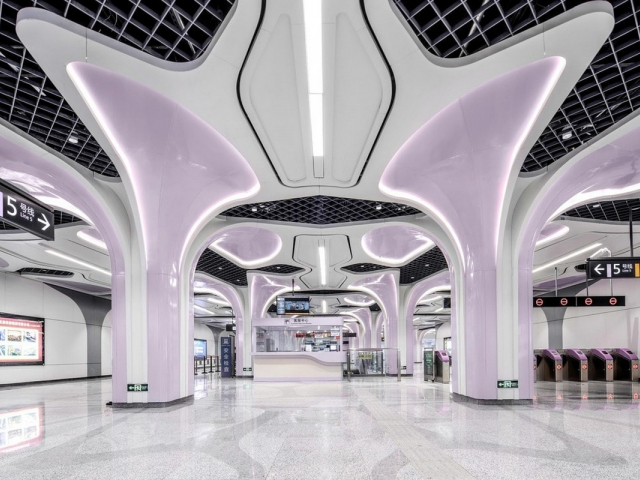
 574
574 7
7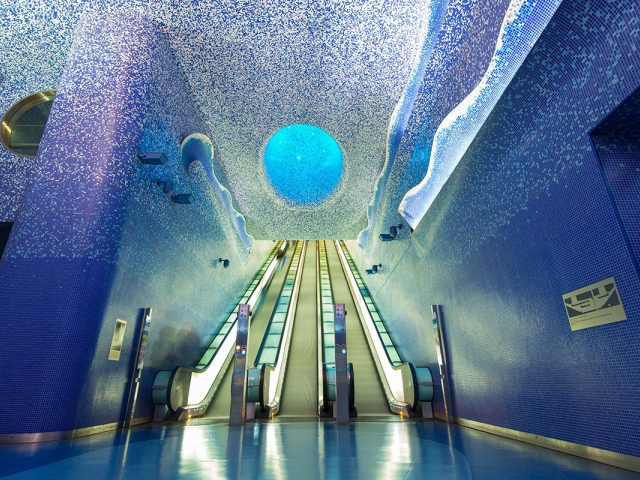

“Jincheng Plaza East,” Chengdu (China)
The station on Chengdu’s Line 18 looks like a futuristic palace. Designers drew inspiration from space-station aesthetics and a digital future. The interior follows a sci‑fi style. Large, streamlined columns stand under soft LED light. Mirrored surfaces create a sense of infinite space. The station ranks among the most technically advanced in the world. It functions as both a transport hub and a multimedia art venue.
“Toledo,” Naples (Italy)
The Toledo station is widely considered one of the most beautiful in Europe. Its main feature is the “Light Crater,” a large conical shaft covered with millions of mosaic tiles in shades of blue and white. As passengers descend on the escalator, they feel immersed in a cone of light. Light enters through special openings above and creates a dynamic play of highlights on the walls. The station is an art installation as much as a transit point.
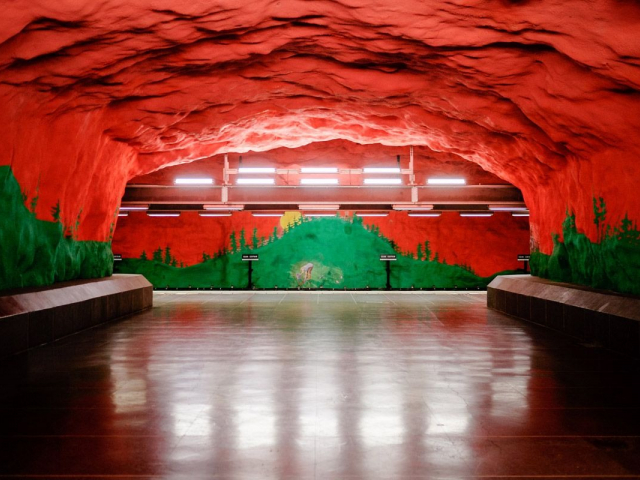
“Solna Centrum,” Stockholm (Sweden)
Stockholm’s metro is often called the world’s longest art gallery. Solna Centrum is one of its most striking works. The platform is carved directly into bedrock and left in a raw, natural state. Artists painted the walls and vaults blood red and forest green. The result feels like a giant fairy‑tale cave. The project highlights environmental and industrialization issues through symbolic imagery.
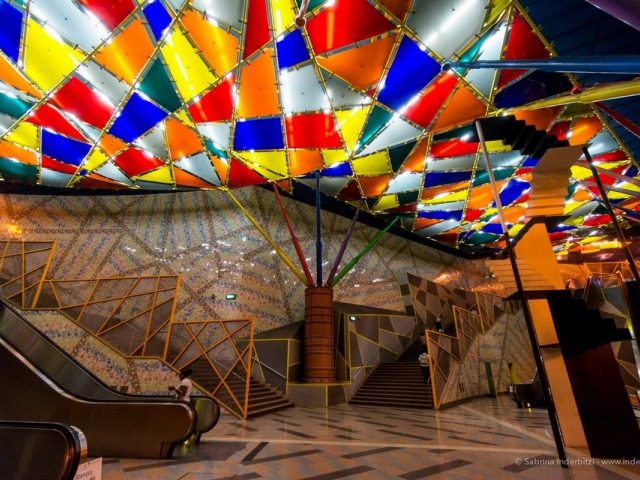
“Olaias,” Lisbon (Portugal)
The Olaias station is an explosion of color and geometric forms. Architects completed it for Expo‑98. The interior resembles a vast contemporary painting. Multicolored stained glass on the ceiling and walls creates kaleidoscopic patterns. Architect Tomas Taveira combined steel, glass, and ceramics to turn a transfer hub into a dynamic, life‑affirming space. Light and shadow through colored panels change the station’s appearance over the day.
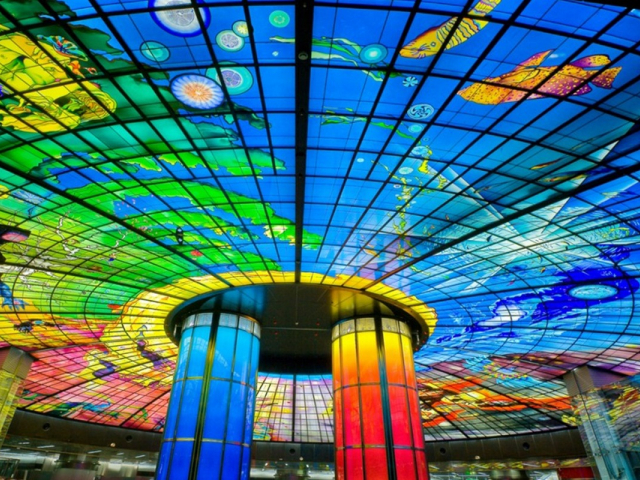
“Formosa Boulevard,” Kaohsiung (Taiwan)
The Formosa Boulevard station is famous for the “Dome of Light,” the world’s largest stained‑glass installation. The dome measures 30 meters in diameter and comprises 4,500 panels. Artist Narcissus Quagliata designed the composition to tell the story of human life through four elements: water, earth, light, and fire. The installation attracts thousands of visitors. The station is often a venue for wedding ceremonies. The site highlights the need for harmony between technology, nature, and the human spirit.
“Westfriedhof,” Munich (Germany)
The Westfriedhof station exemplifies minimalism paired with light design. The platform features 11 giant aluminum lamps, each about four meters in diameter. The lamps emit soft blue, red, and yellow light. The colors contrast with raw, unfinished concrete walls. The solution turns a functional space into an industrial art gallery where light becomes an architectural material. Simple lines and the absence of excess decor create an atmosphere of calm and focus.
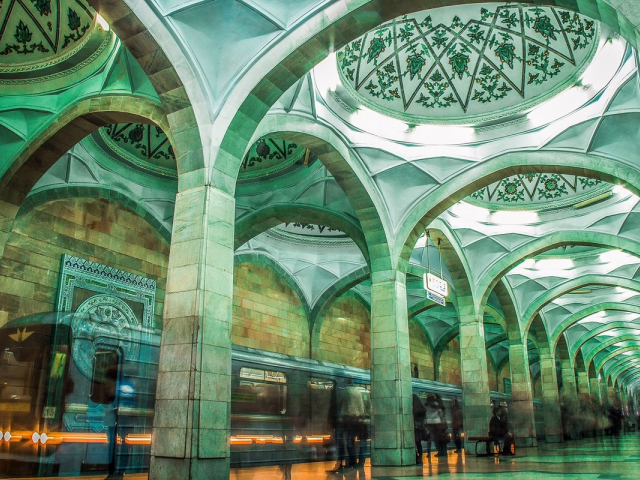
“Alisher Navoi,” Tashkent (Uzbekistan)
The Alisher Navoi station is a masterpiece of Eastern architecture. The station is named after the great poet. The interior follows traditional Uzbek architectural style. Dome vaults feature delicate ganch carving. Walls display mosaic panels depicting scenes from Navoi’s works. The blue, gold, and white palette evokes a palace from the “One Thousand and One Nights” tales. Massive columns and high arches give the hall the grandeur and solemnity typical of Central Asian architecture.


-
Grand Choice
Contest by
InstaForexInstaForex always strives to help you
fulfill your biggest dreams.JOIN CONTEST -
Chancy DepositDeposit your account with $3,000 and get $8000 more!
In March we raffle $8000 within the Chancy Deposit campaign!
Get a chance to win by depositing $3,000 to a trading account. Having fulfilled this condition, you become a campaign participant.JOIN CONTEST -
Trade Wise, Win DeviceTop up your account with at least $500, sign up for the contest, and get a chance to win mobile devices.JOIN CONTEST


